
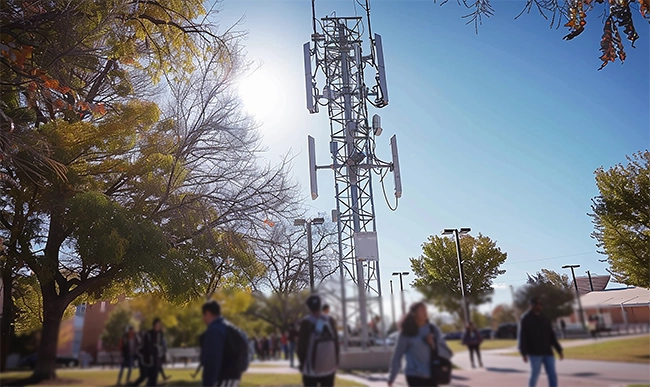

Moving from a lab bench to a campus changes the problem. Coverage, transport, synchronization, compute, devices, applications, and operational responsibilities must work together across a real site.
Built on MX-PDK CAMPUS, this solution combines enterprise infrastructure, programmable O-RAN, agentic AI-RAN, GPU capacity, and a Network Digital Twin, with indoor and/or outdoor radios selected for the deployment. It serves universities, industrial innovation teams, operators, vendors, and integrators building a site platform for field validation, pre-production, and continuing development.
When your programme needs site-scale infrastructure or integrated Digital Twin and optimization capabilities, choose MX-PDK CAMPUS. Scope radio coverage around the required areas and size enterprise compute, GPU resources, and replica workflows to the programme. Radio equipment is selected for the agreed configuration.
Value for the campus programme
| Priority | How the solution helps |
|---|---|
| Build coverage around actual use | Size cells, transport, and compute for the required zones, routes, devices, and traffic. |
| Keep local services and data paths under control | Deploy the Core and application processing on site where required by the architecture. |
| Support successive projects | Reuse the same platform, blueprints, SDKs, and measurements across teams and use cases. |
| Evaluate changes before deployment | Use supported Digital Twin scenarios to compare proposed configurations, then verify their live effect. |
| Understand performance and energy trade-offs | Correlate workload and network behavior with measured per-node power use. |
What this solution brings together
- Infrastructure scoped to the site. The foundation includes three or more enterprise 2U O-Cloud nodes, synchronized fronthaul, persistent storage, and a commercial device fleet with a 20-SIM pool. Indoor and/or outdoor O-RUs are optional and scoped to the site; their count, placement, and capacity follow the required coverage and traffic.
- Programmable network and service behavior. The 5G Core, RICs, SMO, xApp/rApp SDKs, and Container Development Kit (CDK) support local connectivity, mobility, slicing, QoS, and lifecycle workflows. Multiple networks and slices can run concurrently, with capacity and isolation sized to the selected workloads and stack capabilities.
- Integrated AI and compute capacity. On-premises GPU resources, the BAT Agent DevKit, and Observability, Automation, and Optimization Blueprints support network investigation, controlled actions, edge AI, and optimization experiments.
- Network Digital Twin workflows. Included MX-DT and its Scenario Kit provide scoped replicas for repeatable what-if experiments and evaluation of selected changes before rollout.
- Visibility into infrastructure and energy. Network and application telemetry can be examined alongside infrastructure utilization and PDU-based per-node power measurements, with supported power control through the SMO.
More use cases you can unlock
The campus platform extends beyond coverage. Combine its shared software foundation, compute, GPU, Digital Twin, and energy capabilities around the next programme milestone.
| Related use case | Value | Starting scope |
|---|---|---|
| Shared research networks and slices | Support several projects on a common platform while allocating resources and service policies to each. | Concurrent networks and slices are supported; compute, traffic capacity, access controls, and isolation are designed for the programme. |
| Configuration rehearsal and AI policy validation | Compare selected changes in scoped network replicas before introducing them into a live trial. | MX-DT, the Scenario Kit, and Optimization Blueprint are included. Current 5G replication supports OpenAirInterface; scenario fidelity is defined for the use case. |
| Energy-performance optimization | Evaluate whether a configuration reduces measured node power while maintaining the application’s target behavior. | PDU monitoring/control, GPU capacity, and agentic optimization are included. Measurement covers the configured infrastructure and instrumentation. |
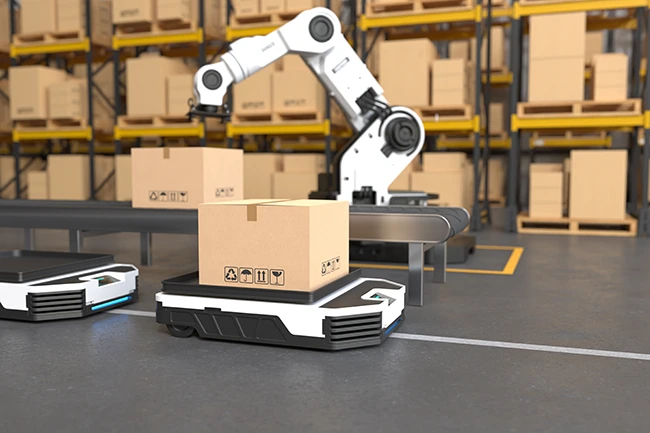
| Local AI and industrial applications | Explore video analytics, connected robotics, or other applications with local processing and controlled data paths. | GPU capacity is included and sized to the project. Application software, models, devices, and the required radio coverage are scoped to the deployment. |
| TN/NTN and sensing research programmes | Extend a shared test facility to supported non-terrestrial scenarios or radio-based sensing studies. | Use supported TN/NTN profiles and sensing workflows. Live NTN equipment, application algorithms, and indoor/outdoor O-RUs are selected or added for the experiment. |
From site requirements to accepted deployment
- Define the site and use cases. Agree coverage zones, available spectrum, devices, mobility routes, applications, data policies, and operational requirements.
- Engineer and integrate. Scope the radio plan, fronthaul, timing, O-Cloud, GPU capacity, network components, and application integration.
- Validate the deployment. Measure coverage, throughput, latency, packet loss, mobility, and service behavior against the agreed acceptance plan.
- Evolve from a measured baseline. Introduce additional applications, cells, or optimization scenarios using reusable configurations and post-change verification.
When experimental workloads share infrastructure with ongoing services, define the required network, compute, and access separation. Dedicated resources or separate zones can be scoped where stronger isolation is needed.
What the Digital Twin adds
MX-DT creates scoped network replicas for scenario testing alongside the live deployment. The Optimization Blueprint uses the Digital Twin backend to evaluate proposed changes against configured validation criteria before rollout.
The current 5G replication scope supports OpenAirInterface. Other stacks and the required scenario fidelity need project-specific assessment. Twin results inform a deployment decision; measurements from the live network verify the actual outcome.
FAQs
1️⃣ Is this a fixed-size package?
No. MX-PDK CAMPUS is scoped to the site and programme. Coverage, radio count, compute and GPU capacity, device fleet, Digital Twin scope, services, and support determine the configuration and quotation.2️⃣ Are the GPU and Digital Twin optional additions?
On-premises GPU capacity, MX-DT, its Scenario Kit, and the Optimization Blueprint are part of the CAMPUS scope. Their sizing and supported scenarios are defined for the project.3️⃣ Are indoor and outdoor radios both included by default?
No. Indoor and/or outdoor O-RUs are optional and selected to match the site. The radio plan determines which equipment belongs in the quotation. Share both the required live coverage and the Digital Twin scope when defining the configuration.4️⃣ Does it include a guaranteed production service level?
The platform supports campus deployment, field validation, and pre-production. Requirements for ongoing production service, availability, redundancy, operational ownership, and service levels must be agreed in the deployment and support scope.5️⃣ Can the network coexist with existing site connectivity?
The campus architecture can retain existing Wi-Fi and wired services while adding private 5G for selected applications. Routing and application integration are scoped to the site; public-network interconnect or roaming requires separate design and validation.6️⃣ What support and deployment services are available?
The software license includes one year of updates and technical support; the reference CAMPUS scope includes a one-year hardware warranty. Site survey, installation, integration, training, and additional development or support services can be scoped to the deployment.Ready to define your campus platform?
Share your site layout, priority coverage zones, devices, traffic and mobility needs, application plans, and operating expectations. BubbleRAN can propose a phased architecture, acceptance approach, and configuration.